Concrete Driveways in Mesquite, TX
Request a driveway estimate
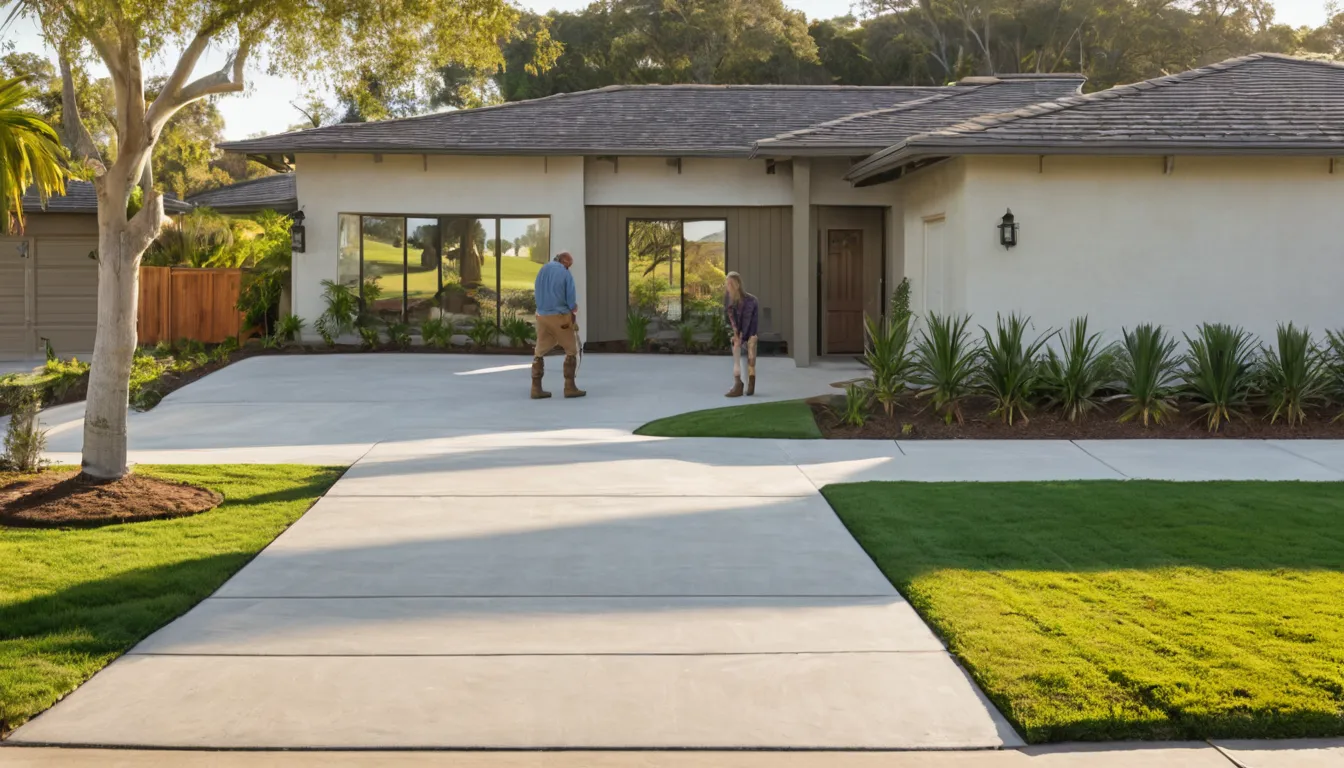
A new driveway changes how your home looks and works every day. It is also the one job that blocks your own front door for a while. So plan it before anyone shows up.
Comfortableprince Concrete is a referral service. We do not pour concrete. We connect homeowners in the Mesquite area with independent local providers who do. You tell us about your project, we point you to a provider, and you decide what happens next. This page gives the answer first, then the reason: when to replace, what the work involves, what it may cost, and how to keep disruption low.
Replace or patch? The short answer
Replace when the damage is widespread. Patch when it is small and the slab is sound. The reason is simple. Patches on a failing slab tend to fail again, and you pay twice.
Many homeowners start by searching for concrete driveway repair. That is a fair first step. A provider can look at the slab and tell you which way to go. Some will only quote a repair. Others focus on full replacement. Ask which one fits your driveway.
Signs you need a new driveway
Look for these before you call anyone.
- Cracks wider than a quarter inch, or cracks that run in a web
- Slabs that have sunk, tilted or split apart
- A surface that flakes, crumbles or shows loose gravel
- Large patches that no longer match the rest
Pooling water
Water should run off toward the street or a yard drain. If puddles sit after a heavy downpour, the slope is off. In a region with tropical storm season, that matters. Standing water softens the ground under the slab and speeds up damage.
Cracks near the house
A crack in the driveway is usually just a driveway crack. A crack that runs along the garage slab or the home's foundation is different. That may call for foundation repair experts, which is a separate trade. A driveway provider can tell you what they see and who to ask next.
Request a callback to check provider availability for a driveway assessment.
What a new driveway project includes
The work follows a set order. Knowing it helps you plan.
- Measuring and marking the layout
- Removing the old slab, if there is one
- Grading and compacting the base
- Setting forms, and often steel or mesh
- Pouring, leveling and finishing the concrete
- Cutting joints so the slab can move without cracking
- Curing and sealing
This is concrete flatwork, and the base matters as much as the slab. A thin base under a thick slab still fails.
Plan around your week
Disruption is the worry for most families. It is also the part you can plan.
Expect the driveway to be closed for a few days to a week or more, depending on size and weather. Park on the street or at a neighbor's, with their okay. Tell the school bus driver and delivery services. Ask the provider for a day-by-day outline.
Pick the right week
Avoid weeks with big events, guests or a move. Also avoid the peak of storm season if you can. Rain can delay a pour. A flexible schedule helps.
Choosing size, thickness and finish
Most home driveways use slabs about four inches thick. Heavier vehicles may need five or six inches. Ask the provider what your trucks, trailers or RV need.
For width, a single-car drive often runs about ten feet. A two-car drive runs about twenty. Add room to open car doors without stepping on the lawn.
Pick your finish
A broom finish is common. It gives grip when the surface is wet. A smooth trowel finish gets slick. Exposed aggregate shows small stones and hides stains. Colored or patterned concrete costs more. Ask to see a sample, not just a photo.
Permits and the street apron
The apron is the part of the driveway where it meets the street. Many towns control it. You may need a permit, and the town may set rules for width, slope and materials.
Ask the provider if they handle the permit. If not, check with your local building or public works office. Do this early. Permit timing can decide your start date.
Built for hot, wet summers
Heat and rain shape concrete work here. Hot weather makes concrete set fast, so crews often pour early in the day. Heavy rain can wash out a base or mar a fresh surface. Good providers watch the forecast and may move a pour.
Mild winters mean frost damage is rare. Still, proper joints and drainage matter more than winter prep.
Choosing a concrete provider
Get more than one written quote. Compare the same things in each.
- Slab thickness and base prep
- Joint spacing and reinforcement
- Finish and sealer
- Demolition and haul-off
- Permit handling
- Schedule and payment terms
Ask if they carry the licenses and insurance your area requires. Ask to see proof. Providers in our network are independent, so verify these yourself.
The cost question
Price depends on size, finish, old slab removal and site access. See the table below for typical U.S. ranges. Your quote will differ. Always ask for it in writing.
After the pour
Keep people and pets off the slab for a day or two. Keep cars off for about a week, or as the provider advises. Hold off on heavy trucks for longer.
Water the slab lightly in hot weather if the provider suggests it. Sealing helps with stains and surface wear. Small hairline cracks can still show up. Joints are there to guide them.
Ready to start?
Tell Comfortableprince Concrete what you have in mind. We pass it to a local provider. You compare, ask questions and choose. Nothing is pushed.
What's Included
Layout and old slab removal
The provider measures, marks the new shape and hauls away the old concrete if needed.
Base and grading
A compacted base and the right slope keep water moving off the slab.
Forms and reinforcement
Forms set the edges. Steel or mesh helps hold the slab together.
Pour, finish and cure
Concrete is placed, leveled, finished and joint-cut, then left to cure properly.
Typical new concrete driveway costs
These are typical U.S. ranges. Real prices vary by size, site and finish. Ask each provider for a written quote that lists every item.
| Item | Typical range | Notes |
|---|---|---|
| Plain broom-finish driveway (per sq ft) | $6 – $12 | Standard four-inch slab with base |
| Single-car driveway | $2,500 – $5,000 | About 10 by 20 feet |
| Two-car driveway | $4,500 – $9,000 | About 20 by 20 feet |
| Old slab removal and haul-off | $1,000 – $3,000 | Depends on thickness and access |
| Exposed aggregate or color (added) | $2 – $8 per sq ft | Added to base price |
| Permit and apron work | $100 – $1,500 | Rules and fees vary by town |
How It Works
Tell us your plan
Share your address area, driveway size and what you want changed. It takes a few minutes.
Get matched with a provider
Comfortableprince Concrete connects you with an independent local provider who handles new concrete driveways.
Review the written quote
Compare scope, finish, schedule and price. Ask questions until the plan is clear.
Choose your start week
Pick a week that suits your household, then confirm the details with the provider.
Why Call Comfortableprince Concrete
A plan before the work
You get the answer, the options and the likely steps before any provider starts the job.
Low disruption
Ask providers about schedule, parking and day-by-day timing so the work fits your household.
Independent providers
Providers in our network run their own businesses. You compare quotes and choose who to hire.
No pressure
Requesting an estimate is no obligation. Every decision stays with you.
Other Services
Need concrete driveways in Mesquite?
Tell us about your driveway or patio project. A local provider in our network can follow up with questions, a site visit, and a written quote.
No obligationConcrete Driveways FAQ
How long does a new concrete driveway take to install?
Most jobs take a few days to a week of active work. Curing adds more time before you can park on it. Weather, permits and old slab removal can change the schedule.
How thick should a concrete driveway be?
Four inches is common for cars and light trucks. Heavier vehicles, RVs and trailers often need five or six inches. A provider can size it for what you actually park on it.
Can I repair my concrete driveway instead of replacing it?
Sometimes. Small cracks and minor surface wear can be patched or sealed. Sunken, split or badly flaking slabs usually need replacement. A local provider can look at it and explain which makes sense.
We service you here
Reach a local provider
Tell us about your driveway or patio project. A local provider in our network can follow up with questions, a site visit, and a written quote.
No obligation